


Table of Contents
- Why Networking Matters So Much
- Pre-Event: Planting Networking Seeds
- Networking Mindset in Event Design
- Event Multiverse’s Networking Approach
- Frequently Asked Questions
At a corporate event, the real value isn’t created under the stage lights, but during the breaks between sessions. A conversation started over coffee can turn into a years-long collaboration. Two company executives meeting at a cocktail reception might launch a project that shapes the industry. Over the years, we’ve learned that the most successful events are those that design not just the program flow, but these spontaneous connections as well.
Networking is no longer a “by-product” of corporate events—it’s the main purpose. Attendees don’t come to a conference just to listen to speakers; they come to meet other professionals in their sector, exchange ideas, and seize business opportunities. However, waiting for these connections to form naturally means using only half of the event’s potential. With the right design, every event can be transformed into a networking opportunity.
Why Networking Matters So Much
Recent research on reasons for attending corporate events reveals an interesting reality: The vast majority of participants attend primarily to network. Presentations, panels, and speakers are certainly important, but the real value lies in the personal and professional connections built throughout the event.
Think about it: An attendee will likely forget the information learned at a conference within a few weeks. However, a business partner, mentor, or potential client they meet there could be the beginning of a relationship that lasts for years. Networking is the element that extends the event’s impact beyond that day, creating long-term value.
Over years of event management experience, we’ve clearly observed: Events designed with a networking focus score higher in attendee satisfaction surveys. Because people go home not just with a certificate or event bag, but with new connections, business cards, and concrete opportunities.
Pre-Event: Planting Networking Seeds
A good networking experience begins long before event day. Before attending, participants want to know who else will be there. Who do they want to meet? Which sectors will professionals be coming from? When this information is shared in advance, attendees already begin forming a networking strategy in their minds.
Some events collect participants’ interests, sectors, and networking goals during registration. This information can later be used to bring the right people together during the event. For example, an attendee from the finance sector could be pre-matched with another participant seeking technology solutions. Event registration platforms and digital tools offer solutions that facilitate these kinds of matches and make networking more structured.
Another dimension of pre-event networking is social media. When sharing begins under the event hashtag on LinkedIn, Instagram, or Twitter, attendees start getting to know each other and engaging. This early contact makes breaking the ice easier when they meet face-to-face on event day.
Networking Mindset in Event Design
An event’s physical design directly affects how much networking takes place. Narrow corridors, cramped seating arrangements, and a program where coffee breaks are rushed through kill networking. Conversely, spacious lounge areas, comfortable seating groups, and extended coffee breaks give people room to chat naturally.
Table arrangements are also critical for networking. Row-style seating turns participants’ backs to each other and only focuses them on the stage. However, round tables encourage eye contact and interaction. Especially at gala dinners and evening events, round table arrangements create an ideal environment for networking. We pay attention to these details in meal organization; because a meal is not just about taste, it’s also an opportunity to build connections.
Another effective method is the “table rotation” technique. Especially at multi-day conferences, ensuring participants sit at different tables for each session makes it possible for everyone to meet different people throughout the event. This simple but effective strategy multiplies networking opportunities exponentially.
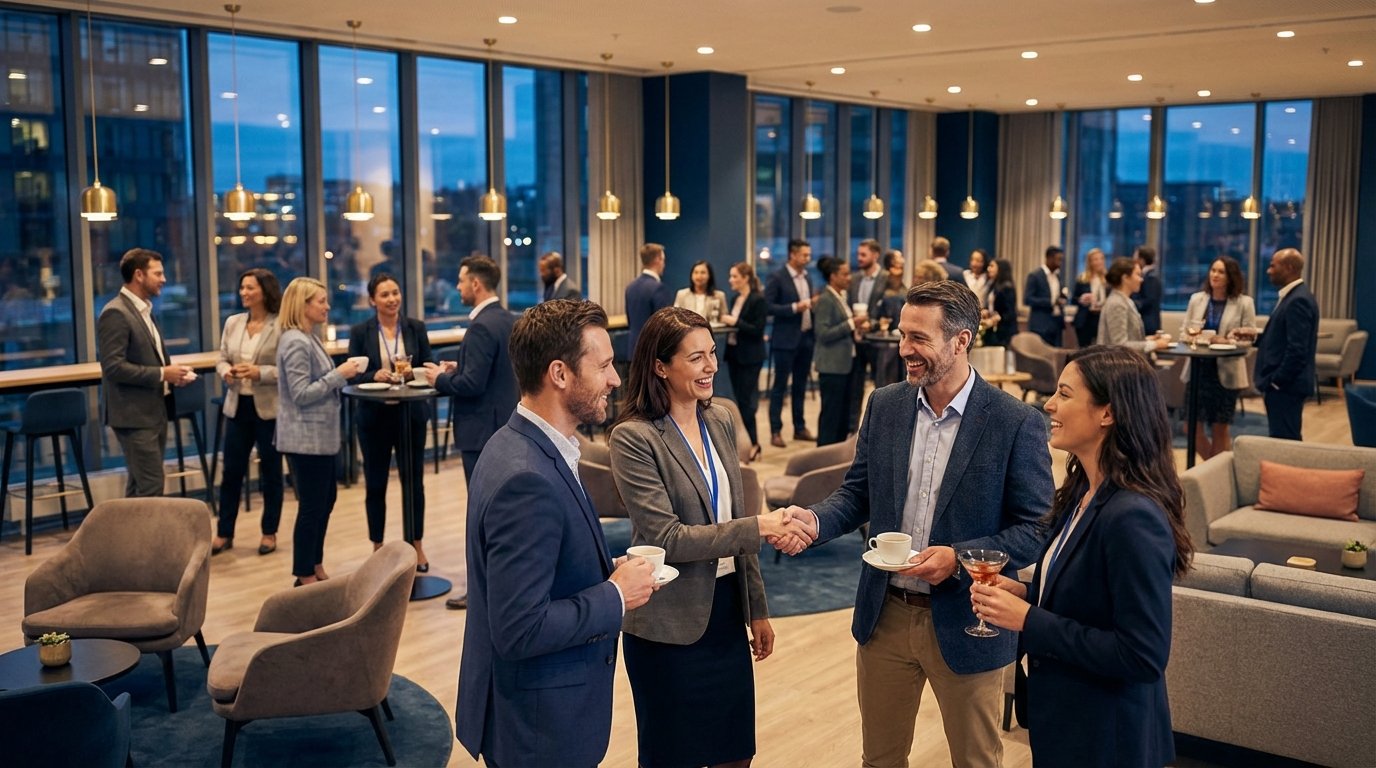
Cocktail format events perhaps offer the most natural environment for networking. Conversations held standing, in a relaxed atmosphere, accompanied by drinks, allow people to express themselves more comfortably. The cocktail evenings we organize as part of Event Multiverse’s incentive experiences are perfect examples that allow participants both to have fun and build connections.
Technology makes networking more organized and effective. QR code business cards prevent paper waste while enabling connections to be saved digitally. Professional networks like LinkedIn are used to maintain connections before and after the event. This makes follow-up much easier after the event.
Live polling and Q&A platforms are another dimension of networking. During sessions, participants can make themselves visible through the questions they ask or comments they share. This digital interaction creates a natural starting point for subsequent face-to-face meetings.
In hybrid events, digital networking becomes even more critical. Participants who cannot attend physically can connect with other attendees in virtual lounges, video chat rooms, or chat platforms. When designing hybrid formats, we ensure both physical and digital participants have equal networking opportunities.
Event Multiverse’s Networking Approach
We design every event through a networking lens. When planning a conference, we focus not only on the speaker program, but also on how long coffee breaks should be, how lounge areas should be arranged, and how participants should be matched.
In incentive programs, this becomes even more pronounced. A team taking a hot air balloon tour in Cappadocia or joining a boat trip in Bodrum isn’t just a fun activity; it’s also moments when team bonds strengthen and natural conversations flow. These kinds of experiences create a networking dynamic that can never be experienced in an office environment.
At large-scale conferences, we organize “structured networking” sessions. In these sessions, participants are divided into small groups around a specific theme and exchange ideas with a moderator. Thus, networking transforms from being coincidental into an organized, goal-oriented activity.
Our creative visual content production also supports networking. When photos and videos taken throughout the event are shared on social media, participants tag each other and continue their connections in the digital realm. The event’s digital footprint ensures networking continues after the event as well.
Frequently Asked Questions
How can networking be facilitated for introverted participants?
Networking environments can sometimes be challenging for introverted participants. Therefore, small group discussions, moderated sessions, and pre-planned matches at events make a big difference. The opportunity to communicate in advance through digital platforms like LinkedIn serves as an icebreaker before face-to-face meetings. Additionally, creating quiet corners and small seating groups in lounge areas provides comfortable networking environments for participants who avoid large crowds.
How much time should be allocated for networking at an event?
The time allocated for networking depends on the event type and total duration. However, as a general rule, at least 90-120 minutes should be dedicated to networking at a full-day conference. This time can be distributed across activities like coffee breaks, lunch, and cocktails. Having coffee breaks of 20-30 minutes allows participants to actually chat rather than just going to the restroom and back. Evening networking events are typically planned for 2-3 hours.
How do online participants network at hybrid events?
Special digital networking areas should be created for online participants at hybrid events. Virtual lounge rooms, video chat rooms, and live chat platforms are used for this purpose. Additionally, mixed networking sessions can be organized for physical and digital participants to interact with each other. For example, breakout rooms can be opened on specific topics allowing both physical and online participants to join the same discussions. At Event Multiverse, when designing hybrid formats, we ensure both groups have equal networking opportunities.
How do we measure networking success?
Several methods can be used to measure networking success. Post-event surveys can ask participants questions like ‘How many new connections did you make?’ or ‘How would you rate your networking experience?’ Business card exchanges, LinkedIn connection requests, and post-event communication rates also provide concrete data. Additionally, follow-up research conducted 3-6 months after the event can investigate whether established connections turned into business opportunities. At Event Multiverse, we share these metrics in detail in our post-event reports.
How do networking events affect the budget?
Networking-focused design doesn’t necessarily increase the event budget; however, it changes budget distribution. Renting larger lounge areas or organizing extended cocktail events can bring additional costs. However, these are investments that increase attendee satisfaction and the event’s long-term value. On the other hand, a networking-friendly event design can save on some elements. For example, you can allocate more time to networking by inviting fewer speakers. At Event Multiverse, we offer networking solutions for every budget.
How is post-event networking sustained?
Post-event networking determines the event’s long-term impact. The first step is to provide participants with a list of contact information for people they met at the event or access to a digital platform. Creating LinkedIn groups or WhatsApp communities encourages participants to stay in touch after the event. Additionally, organizing small-scale follow-up events like ‘post-event coffee meetups’ is effective. At Event Multiverse, we provide consulting to our clients on post-event follow-up strategies and manage these processes when needed.
Networking is the invisible but most valuable part of corporate events. A speaker’s words can be forgotten, a presentation’s details can fade, but a connection made at an event can turn into a relationship lasting years. We design every event with this perspective; because we know that true success isn’t measured in numbers, but in connections made.
If you also want to highlight networking at your corporate events and offer your participants unforgettable connection opportunities, contact us. With our experience in event management and planning, we think through every detail for you, ensuring networking happens naturally and effectively.