


Table of Contents
- Why Event Visuals Are So Valuable
- Planning Starts Before the Event
- Types of Content You Can Produce from a Single Event
- Visual Identity and Brand Consistency
- Content Should Keep Working After the Event
- Frequently Asked Questions
The event is over. Attendees have left, the stage has been dismantled, the decor packed away. What remains? Hundreds of photos, a few video recordings, and in all likelihood, a folder no one has opened since.
These visuals will either sit there as an archive — or become one of your brand’s most powerful content assets. The difference starts before the event does.
Why Event Visuals Are So Valuable
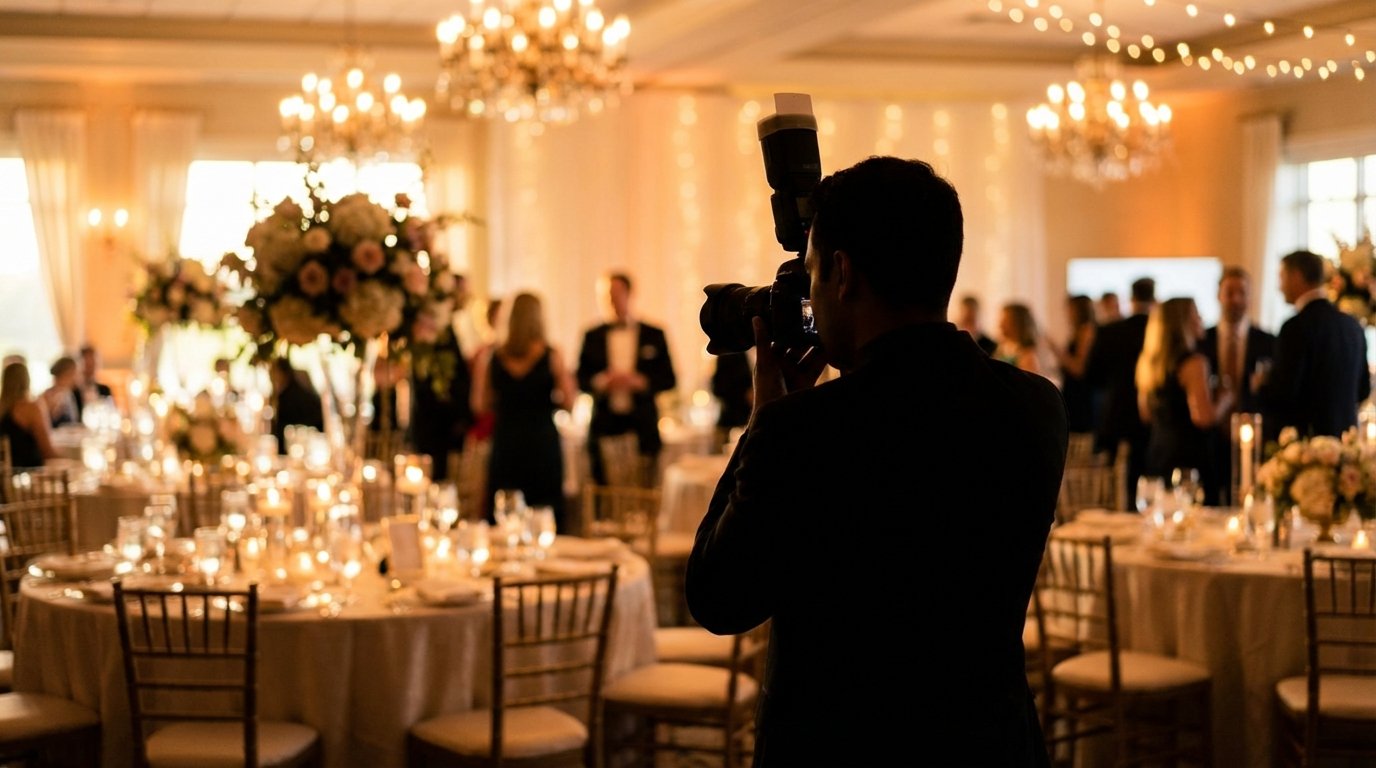
A candid smile captured at a conference does something that a corporate photo produced after hours in a studio cannot: it shows people what is real. Audiences sense when something has been staged. But a visual that comes from inside the moment builds trust far more quickly.
Corporate events — from gala dinners to incentive programs and product launches — are the moments where your brand is at its most alive and authentic. When these moments are captured well, they generate months of content: across social media, your newsletters, proposal decks, and your website. And unlike a studio shoot, this content shows your brand in motion — alongside real people, real venues, real moments.
Many brand managers fail to fully leverage the visuals they have after an event. The reason is rarely technical quality — it is a lack of strategic planning. Telling a camera crew to “shoot everything” almost always ends in an archive full of footage no one knows what to do with.

Planning Starts Before the Event
A strong visual strategy is an inseparable part of event planning. Which channels will this content be produced for? LinkedIn? Instagram? Internal communications? Each platform calls for a different frame, a different crop ratio, a different atmosphere. Knowing this in advance tells your camera crew where to focus their attention.
Every detail — from stage setup to lighting design — is simultaneously a photography decision. The intentional placement of branded areas, the alignment of your color palette with the decor, the angles from which speakers will be shot: all of this needs to be decided before the event. Otherwise, the crew won’t know what to capture on the day, and you won’t know what to do with the footage afterward.
This is why, within our corporate event organization in Turkey services, visual content planning runs in parallel with logistics and technical setup. How the event looks is just as important as how it feels.
Types of Content You Can Produce from a Single Event
A professionally planned event can yield content in a wide variety of formats. Some can be published in real time on the day itself; others will feed your content calendar for weeks.
The highlight video is the most powerful format for distilling the spirit of an event into two or three minutes. When edited well, it becomes the most persuasive promotional material you have for your next event. Stage moments, audience reactions, venue atmosphere — all working together to create that feeling in the viewer: “I wish I had been there.”
Social media reels and short clips are planned separately for publishing during or immediately after the event. These speak a different language: faster, more dynamic, needing to hold attention within the first three seconds. From a single event, you can extract both a clean, professional clip for LinkedIn and an energetic reel for Instagram — but only if both formats are considered during the shoot itself.
Photo series are the most overlooked content type. A speaker’s gesture, a networking moment between attendees, a close-up of a branded detail — these can be used across digital and print communications for months. Ten photographs taken in the right light and the right composition are worth far more than hundreds of mediocre images.
Interview and testimonial videos are frequently skipped in post-event content production. Yet short comments from attendees about their experience reinforce your brand’s credibility in ways no advertising copy can. Building these shoots into the event program eliminates the regret of “we should have filmed that.”
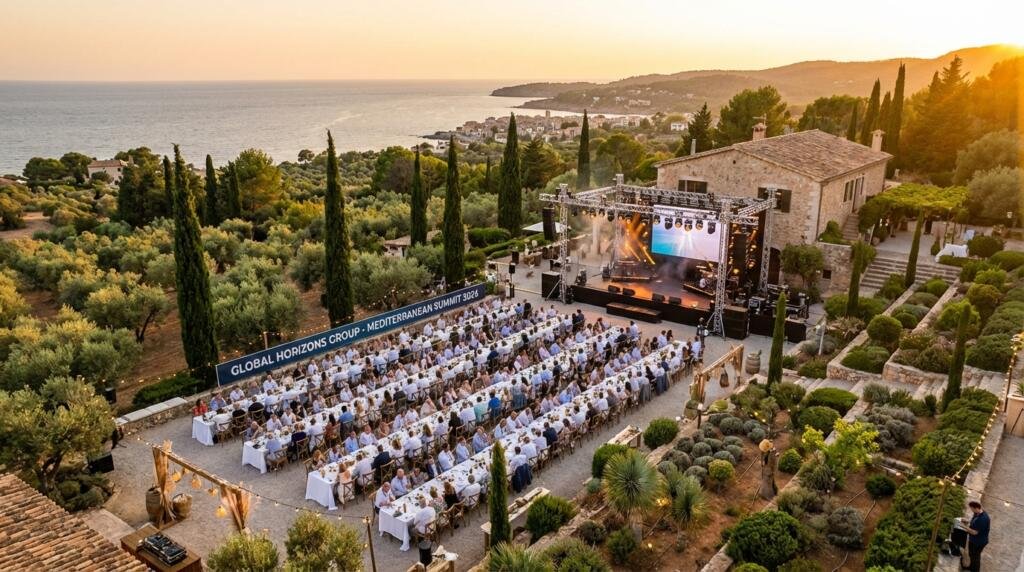
Drone footage offers a perspective that ground-level cameras simply cannot provide, particularly for outdoor events. An aerial shot of a seaside gala, a vineyard gathering, or an open-air conference conveys a sense of scale that changes how the event is perceived. This content is exceptionally strong in both promotional materials and sponsorship presentations.
Visual Identity and Brand Consistency
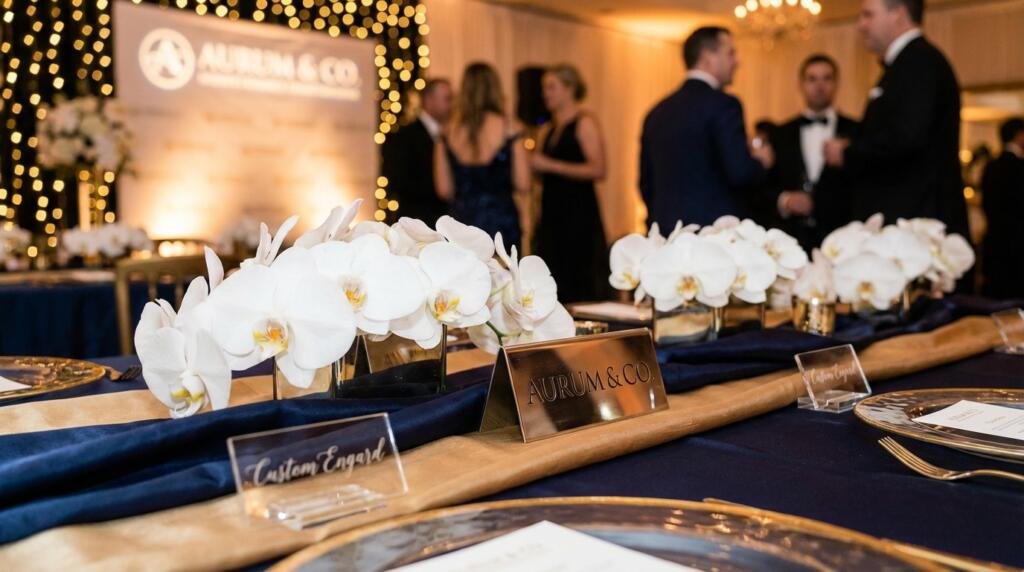
For event visuals to become brand content, one condition must be met: consistency. Every published image must align with your brand’s visual language. If event photographs look disconnected from your corporate identity, they become unusable — regardless of their technical quality.
This consistency does not happen by accident. Lighting that harmonizes with your color palette, logos placed intentionally in branded areas, a decor language that matches your corporate identity — all of this must be designed in advance. This is where creative visual content production comes in: ensuring the aesthetic coherence of the event and guaranteeing that the visuals produced are ready to use directly.
As a brand manager, the far more efficient path is walking away from a well-planned event with content you can publish immediately — rather than spending extra budget and time reprocessing visuals after the fact.
Content Should Keep Working After the Event
A well-produced event visual does not expire on the day of the event. A speaker clip from a conference can resurface in a LinkedIn post three months later. Drone footage from an incentive program can become the strongest slide in a client proposal. A photograph from last year’s gala can serve as the cover image for this year’s invitation email.
Making this possible requires proper archiving, tagging, and rights clearance after the event. If attendee images will be used in corporate communications, a consent process needs to be built into the event planning itself. It may seem like a small detail, but it is the foundation for using your content with confidence for months to come.
We apply the same approach in our corporate event organization in Antalya services. The Mediterranean’s extraordinary light and venues offer a major visual content advantage. Capturing that advantage requires the shoot strategy to be considered from the very beginning of event planning — not after the event is over.
Frequently Asked Questions
When should planning for event photography and video begin?
Visual content planning should begin in the earliest stages of event organization. Venue selection, decor decisions, and the program schedule all directly affect the shoot strategy. Last-minute planning compromises both quality and the variety of usable content you walk away with.
Is professional photography necessary for smaller events?
Regardless of event size, the quality of the content produced represents your brand. A photograph from a 20-person board meeting, captured with the right composition, can hold a strong place in your corporate communications. What matters is not the number of attendees, but where the content is going.
Which channels can we use event visuals across?
Social media, your website, email newsletters, press releases, client presentations, sponsorship proposals, and internal communications — event visuals can be used across all of these. When different formats are planned during the content production phase for each channel, the results are far more efficient.
Does drone filming require special permits?
Yes, commercial drone operations in Turkey require obtaining the necessary legal permits. This process should be managed as part of the event planning. Since airspace restrictions can also affect venue selection, if drone filming is planned, this decision should be made early in the process.